
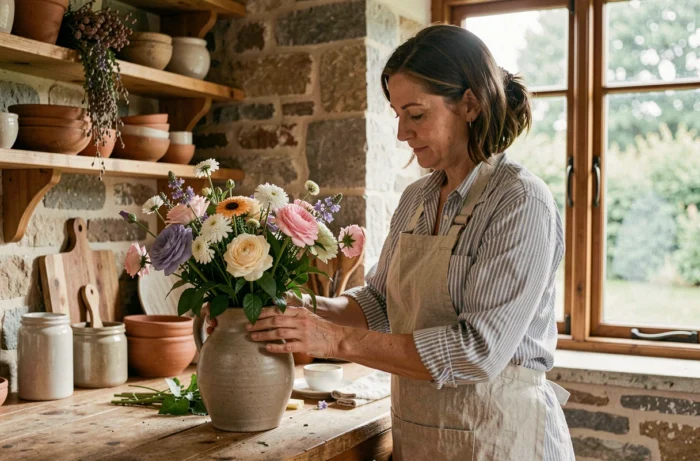
Inspiring Ideas and Tips to Enhance Your Home and Garden Easily
A gray cinder block wall facing the terrace, a lawn that turns yellow by June, an unstable garden set under a faded parasol: we all know this starting point. Enhancing your home and garden doesn’t necessarily require a landscaper’s budget, but rather a few targeted choices that truly change the daily use of the spaces.
Zero phyto constraint: transforming maintenance into a decorative lever
Since July 1, 2022, the ban on chemical pesticides applies to all private properties used for residential purposes, including outdoor spaces. Only biocontrol products, low-risk products, and those permitted in organic farming remain accessible. This regulatory constraint, stemming from the Labbé law (law no. 2014-110 of February 6, 2014) and the decree of January 15, 2021, has a direct effect on how to design a garden.
We can no longer rely on herbicides to keep pathways tidy between two flower beds. Mulching and ground covers replace herbicides and become true elements of visual composition. A mineral mulch (light gravel, crushed slate) structures the lines as much as it limits regrowth. Perennial ground covers like ivy or vinca fill empty spaces while requiring very little watering.
Rather than fighting against spontaneous vegetation, we can integrate it. Thermal weeding remains a one-off option, but the most effective strategy is to leave no bare soil: between the slabs of a terrace, between the feet of a hedge, at the base of a tree. What guides the whole approach is moving to zero phyto techniques that become an aesthetic choice, not a chore to endure.
To explore other concrete ideas for interior and exterior design, you can access Déco et Jardin info and browse the themes by category.
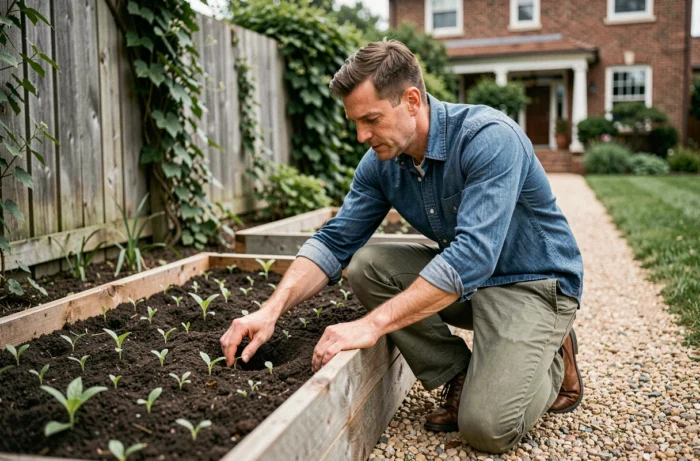
Robust plants and grasses: a garden that thrives without intensive watering
The classic reflex is to fill the flower beds with colorful annuals that are replaced each season. The problem: it requires water, time, and constant renewal. The rising alternative is local plants chosen for their drought resistance and their ability to persist from year to year.
Three plant families change the game when you want a beautiful garden without disproportionate effort:
- Lavenders and shrub salvias, which structure a bed with volume and color without requiring fertilizers or special treatments.
- Ornamental grasses (miscanthus, stipa, blue fescue), which bring movement, filter low light, and remain graphic even in winter.
- Persistent ground covers (thyme, sedum, vinca), which quickly carpet difficult areas, limit evaporation, and eliminate the need for weeding.
This type of plant palette also enhances the garden’s biodiversity. Grasses serve as a refuge for beneficial insects, and herbs attract pollinators. We gain on both fronts: less maintenance and a more vibrant garden.
Light and relaxation corner: what truly changes the use of a terrace
You can place the most beautiful garden furniture on the market, but if the lighting consists of a ceiling light above the front door, the terrace remains unused after 9 PM. Outdoor lighting is the most underestimated lever for extending the use of a space.
Low lighting positioned at ankle height transforms a terrace into a living room. Solar bollards along a pathway, a string of lights stretched between two posts, recessed lights in the steps of a staircase: each low light source creates an ambiance without dazzling. Feedback varies on the durability of entry-level solar lights, but LED models with a remote panel hold up significantly better over time.
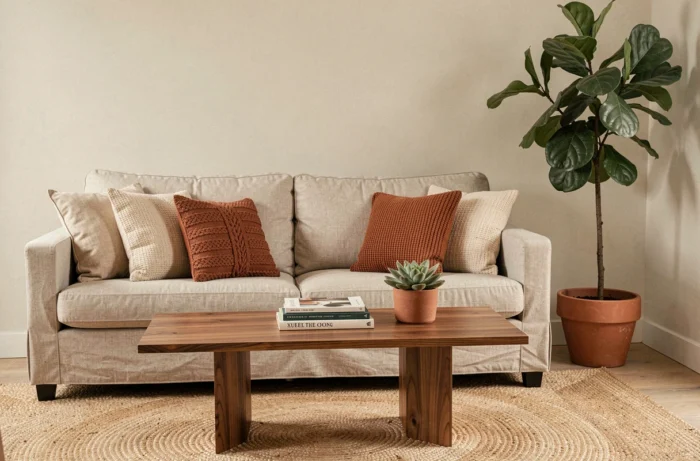
For the relaxation area itself, the central question is not the style of the furniture but its positioning. A garden set placed against the house wall creates a corridor, not a convivial space. Shifting the seating towards the center of the terrace or orienting it towards the garden rather than facing the facade radically changes the sense of space.
Outdoor kitchen and al fresco dining
Setting up a cooking point outside, even minimal (plancha on a cart, built-in barbecue), anchors regular use. We eat outside more often when we don’t have to make trips back and forth to the kitchen. An outdoor work surface in polished concrete or reconstituted stone, placed on two metal legs, is enough to create a functional station.
The common mistake: undersizing the table. For the family to actually sit outside, you need at least a table for six, even if there are only four of you. A table that is too small discourages outdoor meals because there is never enough space for dishes, glasses, and elbows.
Facade and entrance: the details that change the perception of the house
The interior of the house often receives all the decorative attention, while the exterior entrance remains unchanged since construction. However, a few targeted interventions can modify the overall perception.
Repainting the front door in a bold color (a deep blue, sage green, terracotta) costs little and creates an immediate focal point. Pairing this color with flower pots placed on either side creates a visual coherence that gives the impression of a thoughtfully designed space.
Replacing the house number and mailbox is part of those micro-investments whose effect is disproportionate. A brushed stainless steel number fixed on a stone wall, a built-in mailbox rather than one screwed onto a post: these details signal a well-maintained place.
On the plant side, a climbing plant trained on a trellis along the facade (star jasmine, clematis) dresses a wall without heavy work. The trellis itself, made of wood or metal, adds texture to a flat facade.
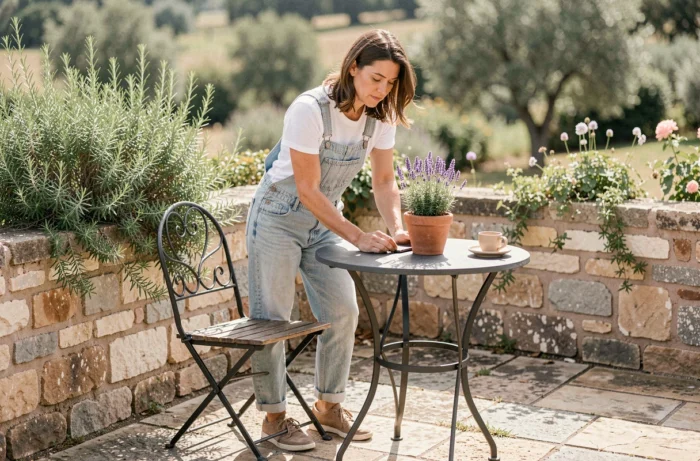
Each improvement mentioned here has one thing in common: it starts from a concrete problem (bare soil, underutilized terrace, dull facade) and addresses it with a precise gesture. Gardens and homes that invite you to spend time are not those where everything has been redone at once, but those where each detail has been chosen for a functional reason before being aesthetic.