
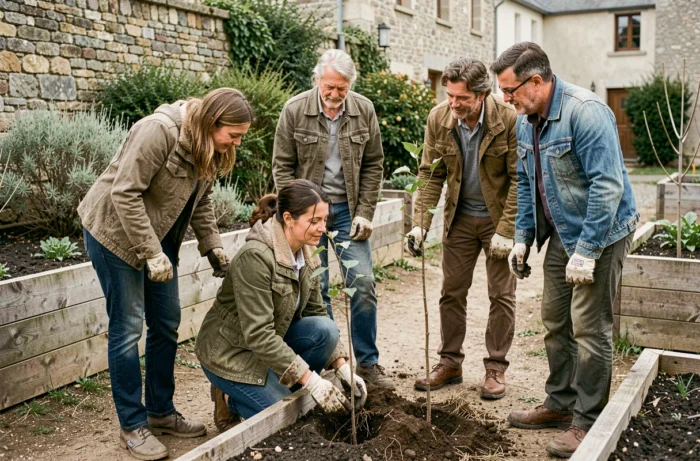
How Local Initiatives Are Shaping a More Sustainable Future for Our Communities
Measuring the real impact of local initiatives on a region’s sustainability means looking beyond their launch. Community gardens, experimental pedestrianisation, reuse supply chains: these projects often get off the ground with temporary funding. The central question of this article is whether they can continue: which initiatives tested by local authorities survive once subsidies end, and what criteria do elected officials use to decide whether to make them permanent, adapt them or abandon them?
Green Fund and local authority expertise: what public support actually funds
The Green Fund is often seen as a source of funding for construction work. Its engineering support is less well known: it can also fund studies, planning and the evaluation of local strategies. For a small local authority without a dedicated department, this engineering support determines whether it can develop a project before implementation is even considered.
The problem arises when funding covers the pilot phase but not day-to-day operations. A local initiative can lose momentum if its financial or operational support is suddenly withdrawn. The challenge is not just financial; it is organisational.
Resources such as those available on terre-en-vues.fr document the links between local agricultural projects and their roots in the region. This is a useful perspective for local authorities seeking to assess whether short supply chains can remain viable beyond their initial subsidy.
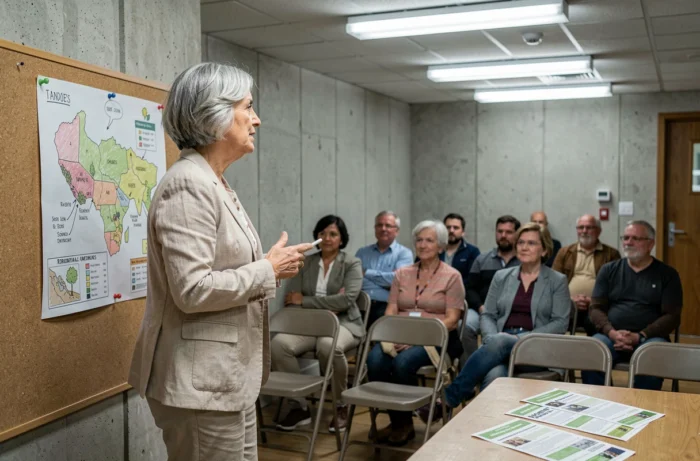
Local ecological transition: a comparison of three initiatives tested in different regions
Examples from La Rochelle and Palaiseau make it possible to compare initiatives with very different approaches. The table below compares three types of initiative by sector, testing method and prospects for becoming permanent.
| Initiative | Sector | Testing method | Prospects after the pilot phase |
|---|---|---|---|
| Subsidised food boxes (La Rochelle, 2025 call for projects) | Food, social justice | Temporary grant through a local call for projects | Depends on renewed funding or a self-sustaining business model |
| Partial pedestrianisation of the town centre (Palaiseau) | Mobility, urban planning | Reversible trial, followed by a public vote | Collective decision on the long-term arrangements |
| Local reuse scheme for sports textiles (La Rochelle, 2025 call for projects) | Circular economy, waste | Start-up support | Viability depends on the volume collected and local outlets |
Each initiative follows a different path to becoming permanent: recurring funding, democratic approval or financial self-sufficiency. Local authorities launching pilot projects should identify from the outset which of these three scenarios they are aiming for.
Sustainable regional development: what sets long-lasting projects apart
Palaiseau’s experience illustrates a mechanism that competitors rarely document: reversibility as a decision-making tool. Trialling partial pedestrianisation, gathering feedback from residents and businesses, then putting the outcome to a public vote means factoring social acceptance into the process before making a final decision.
By contrast, a project funded through a call for proposals with no clear exit plan risks coming to an abrupt end. La Rochelle’s subsidised food boxes combine ecological transition with social justice, but their continuation depends on renewed grant funding or a lasting commitment from a local organisation.
Three factors set apart initiatives that survive beyond the pilot phase:
- Clear political backing: in 2026, ADEME published a resource on elected officials’ involvement in the Committed to Ecological Transition Territory programme, highlighting how decision-makers’ commitment determines whether projects are adopted across local authority departments
- An evaluation process built in from the outset, making it possible to measure results before funding ends and document what works
- Alignment with existing local practices, such as the trial of water management solutions in community gardens in La Rochelle, which builds on practices already in place
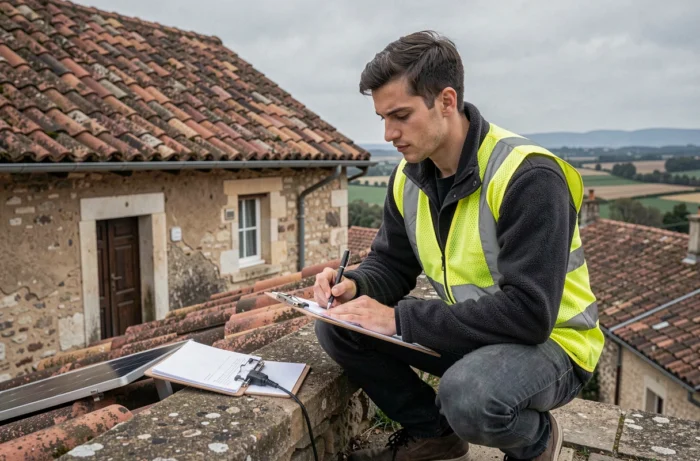
How local authorities are organised: the unseen driver of ecological transition
Articles about local initiatives almost always focus on visible projects. The internal organisation of local authorities remains a blind spot. A municipality or inter-municipal authority’s ability to manage a sustainable project depends on its staffing, coordination between departments and employee training.
Without in-house expertise, even a well-funded project can fail when it comes to scaling up. The Green Fund’s engineering support partly addresses this need, but it cannot replace expertise embedded in the organisation over the long term.
Access to technical expertise is a particularly pressing issue for rural local authorities. A region with a dedicated energy transition officer is not affected by the end of a pilot programme in the same way as one where the project rests on the shoulders of a single elected official.
Embedding commitment beyond the elected officials driving change
ADEME highlights case studies on how commitment can be embedded across local authorities. The challenge is to move beyond relying on a single elected official or department and make the approach part of day-to-day operations. Local authorities that succeed in doing so turn a one-off project into a lasting public policy.
This means using practical tools: incorporating environmental criteria into public procurement, providing ongoing training for technical staff and creating shared roles across municipalities. None of these measures is spectacular, but their absence often explains why a promising initiative fails to outlast its original champion.
A region’s sustainability is not determined solely by high-profile pilot projects. It depends on local authorities’ ability to make experimentation part of everyday operations, without relying on exceptional funding or an electoral timetable. The most reliable indicator is the presence of permanent local expertise capable of driving, evaluating and adapting initiatives over time.