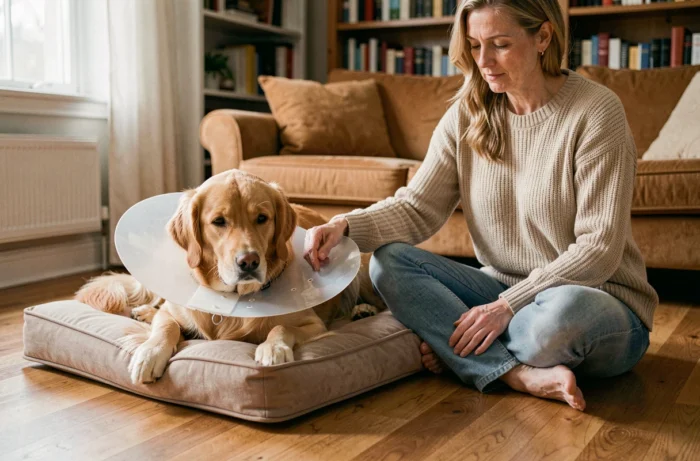
How long should you let your dog rest after spaying?
Your dog has just been spayed and seems eager to run around the next day. This newfound energy is misleading: beneath the skin, the tissues are still fragile. The duration of rest after spaying depends on the sex of the animal, the surgical technique used, and the depth of the incision. Understanding these differences helps avoid the most common complications.
Internal Healing After Spaying: Why the Skin Doesn’t Tell the Whole Story
A dog may appear to be in great shape three to five days after the surgery. The skin closes quickly, the stitches hold, and the animal shows no signs of pain. This apparent return to normalcy leads many owners to relax their vigilance too soon.
The problem lies deeper. The abdominal wall and internal tissues heal after the skin. In a female dog spayed by ovariectomy or ovariohysterectomy, the incision goes through several layers of muscle. These layers need time to regain their strength, even when the skin surface seems intact.
It is precisely this discrepancy that causes the majority of post-operative complications. A jump from the couch, a run in the yard, or a vigorous play session can reopen the deeper layers without the external wound showing any immediate visible signs. As detailed in the Boule de Poil guide on spaying, this phase of invisible healing requires the most vigilance.
Rest After Male Castration or Female Spaying: Different Durations
You may have read that “ten days of rest” are required after spaying. This figure is an average that masks a more nuanced reality depending on your animal’s sex.
Male Dog Castration
Castration does not require opening the abdominal cavity. The incision is made in front of the scrotum to remove the testicles. The recommended strict rest lasts about 7 to 10 days. During this period, jumping, running, and playing should be prohibited.
Most males feel well enough to want to resume normal activity by the evening of the procedure. This is precisely when restraint is necessary: skin healing takes about ten days, and any tension on the wound can lead to swelling or dehiscence.
Female Dog Spaying
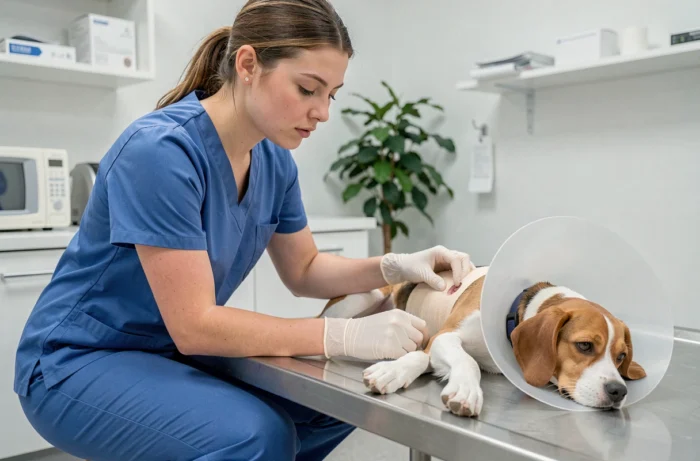
The procedure is more invasive. Whether it is an ovariectomy or an ovariohysterectomy, the veterinarian opens the abdominal cavity. The strict activity restriction lasts for 10 to 14 days for female dogs.
This difference is explained by the depth of the tissues involved. The abdominal muscles that are cut need to heal layer by layer. Resuming exercise too soon, even moderately, exposes the dog to invisible internal complications.
Warning Signs and Wound Monitoring After Surgery
Daily monitoring of the operated area is the best way to detect a problem before it worsens. Here are the signals that should prompt you to contact your veterinarian without delay:
- Swelling that increases instead of decreasing after the first two days, or colored discharge (yellowish, greenish) at the incision site
- Your dog licks or nibbles the wound compulsively despite wearing an Elizabethan collar, which may indicate abnormal pain or infection
- A persistent loss of appetite beyond 48 hours after the procedure, accompanied by marked lethargy or fever
The Elizabethan collar must remain in place for the entire healing period, which is 10 to 14 days. Removing it “just to eat” or “at night” is enough to give the animal the opportunity to lick its wound, introducing bacteria and delaying healing.
Resuming Physical Activity for Your Dog: Week by Week
The transition from strict rest to returning to normal life does not happen in a day. Forcing the resumption of activity at the end of the skin healing period remains risky for the deeper tissues.
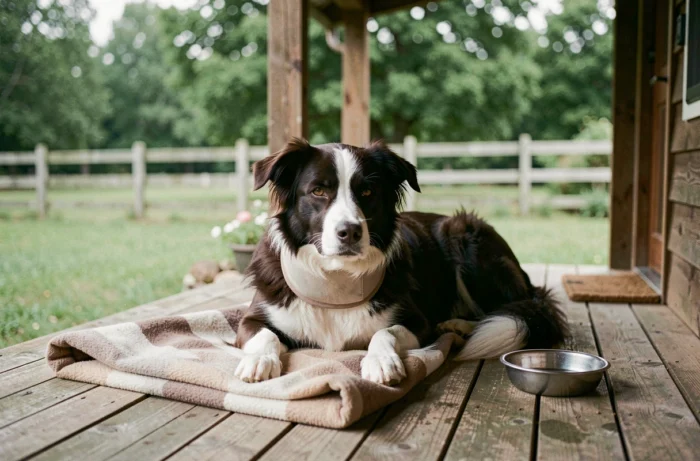
During the first week, outings should be limited to short leash walks for bathroom needs. No running, no jumping, no repeated stairs. If your dog tends to bounce around, confining them to a quiet room or a crate suitable for their size remains the most reliable solution.
Starting in the second week, activity can gradually increase. Slightly longer walks, still on a leash, allow you to test the animal’s reaction. If you observe discomfort, limping, or a change in behavior after exertion, revert to the previous level.
Intense efforts (free running, playing with other dogs, agility) should only resume after confirmation from the veterinarian. This follow-up visit, usually scheduled between 10 and 14 days after the procedure, allows for checking that both external and internal healing is complete.
Surgical Technique and Recovery Duration: The Impact of Laparoscopy
Not all spay surgeries are equal in terms of recovery. The classic technique via laparotomy (abdominal opening) remains the most practiced, but spaying by laparoscopy is gaining ground in equipped veterinary clinics.
Laparoscopy uses small incisions and a camera to remove the ovaries. The tissues are less traumatized, which shortens the recovery period. Female dogs operated on by this method generally return to normal activity more quickly than those operated on by the classic method.
This difference in protocol based on technique rarely appears in standard post-operative advice. If your veterinarian offers laparoscopy, ask for a recovery schedule tailored to this method rather than following general recommendations.
The duration of rest therefore depends on three concrete factors: the sex of the animal, the chosen surgical technique, and the healing speed specific to each dog. Respecting the full restriction period, even when the animal seems recovered, remains the most protective gesture you can offer after this procedure.