
Building an Eco-Friendly Home: Benefits, Tips, and Sustainable Solutions for Your Habitat
Since January 1, 2022, every new individual house submitted for a building permit must comply with the environmental regulation RE2020. A decree from December 30, 2024, which came into effect on January 1, 2025, has further tightened the carbon and energy thresholds. Building an ecological house is no longer a militant option: it is the legal framework for new construction in France.
RE2020 Carbon Thresholds: How the Levels Change Material Choices
RE2020 imposes a construction Ic indicator that caps the greenhouse gas emissions of the materials used. These thresholds are dated based on the date of submission of the building permit, with levels for 2022-2024, 2025-2027, and then after 2028. Each period tightens the requirements.
For permits submitted since January 2025, bio-sourced materials are becoming almost necessary to stay under the carbon caps. Wood, straw, hemp, wood fiber, or cellulose wadding can offset the carbon footprint of more emissive components like concrete or steel.
Contrary to what some construction guides suggest, the choice of material is therefore not just a matter of thermal performance or budget. It is primarily a regulatory constraint: a project whose carbon footprint exceeds the Ic threshold will be rejected. Specialized builders like Maisons Eco Durables incorporate this data from the design phase to avoid unpleasant surprises at the time of submission.
Heating in New Ecological Houses: Heat Pumps as the De Facto Standard
RE2020 does not explicitly mention the prohibition of direct electric heating (convectors, radiant panels). However, the primary energy consumption thresholds make these systems practically incompatible with regulatory compliance for an individual house.
The heat pump has become the default heating system for new houses. Air-water or geothermal heat pumps display a performance coefficient that allows staying under the energy caps without resorting to costly complementary solutions.
Alternatives to All-Heat Pump Systems
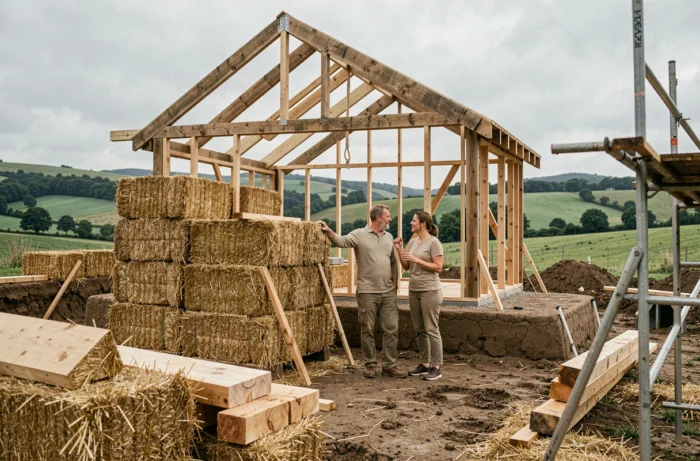
Field feedback varies on this point: some projects combine a wood stove with a low-power heat pump, while others rely on solar thermal for hot water to reduce the demand on the heat pump. The choice depends on the local climate, the building’s orientation, and the overall budget.
- Air-water heat pump: the most common solution, suitable for the majority of French climatic zones, but sensitive to very low temperatures.
- Geothermal heat pump: stable performance year-round due to the constant ground temperature, but significantly higher installation costs (drilling or horizontal collectors).
- Wood or pellet stove as a supplement: reduces dependence on electricity and improves the carbon footprint if the wood is locally certified, but is not sufficient as the main heating source for RE2020 compliance.
Bioclimatic Design: Orientation Before Equipment
Before choosing high-performance equipment, an ecological house should be considered in terms of its placement on the land. The south orientation of living spaces passively reduces heating needs, with no additional material costs. South-facing glass surfaces capture solar gains in winter, while roof overhangs or sunshades limit summer overheating.
RE2020 also requires a thermal study and a feasibility study of energy supplies before the building permit is submitted. These two studies are mandatory and condition the issuance of the compliance certificate.
Ventilation and Air Tightness
A highly insulated house with bio-sourced materials loses all its value if the envelope is not airtight and if the ventilation is poorly sized. The air tightness test is mandatory upon completion of the work. It measures the leakage that degrades the actual energy performance of the building.
Controlled mechanical ventilation (CMV) with double flow recovers the heat from the extracted air to preheat the incoming air. This system improves indoor air quality while limiting thermal losses, a point confirmed by available data, although the extent varies according to the rigor of implementation.
Bio-sourced Materials: Real Performance and Known Limits
Construction wood (wood frame, CLT) has a favorable carbon footprint because it stores CO2 throughout its lifespan. Wood fiber and cellulose wadding offer good thermal inertia in summer, which limits overheating, an asset in the face of more frequent heatwaves.
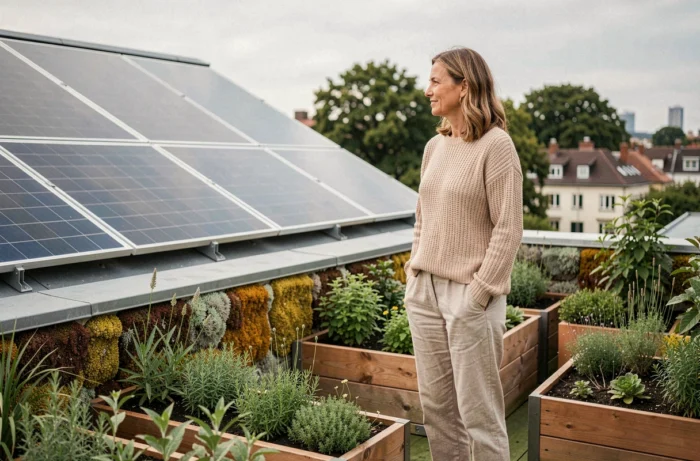
However, not all bio-sourced materials are equal in terms of durability. Straw requires careful implementation to avoid moisture problems. Hemp requires a binder (usually lime) whose production remains emissive. The choice of bio-sourced material depends on the climate, budget, and local artisans’ skills.
- Wood (frame or CLT): structural, high insulation performance, but vulnerable to wood-destroying insects without appropriate treatment.
- Straw: very good thermal insulator at low material cost, but requires strict protection against moisture during construction.
- Hemp (hemp concrete): good hygrometric regulator, superior summer comfort compared to polystyrene, but long drying time that extends the construction period.
- Cellulose wadding: made from recycled paper, effective for blown insulation in attics, but possible settling if the installation density is insufficient.
Mandatory Certificates and Compliance
Upon completion of the work, the project owner must provide a RE2020 compliance certificate issued by a technical controller or a diagnostician. Without this document, the construction’s compliance is not validated. This step, often overlooked in consumer guides, is crucial for the legal and heritage value of the property.
Ecological construction is now governed by thresholds that tighten every three years. Projects submitted after 2028 will have to comply with even lower carbon caps, which will further steer the sectors towards wood and bio-sourced insulators. For a project launched today, anticipating these levels allows for the construction of a building that will remain compliant and valuable in the long term.