Paranormal Phenomena at Home: How to Recognize a Haunted House?
A shutter that slams at three in the morning, a room that is always colder than the others, a pet staring at an empty corner of the living room: we have all experienced at least one situation in a home that is difficult to explain. Before concluding that a house is haunted, it is important to set a framework. All the paranormal phenomena perceived at home are based on a mix of real physical signals and personal interpretation.
Differentiating between the two is the first step to keeping a cool head.
Micro-vibrations: the false ghosts of the building
Researchers remind us that micro-vibrations related to transportation, household appliances, or the very structure of the building can generate footsteps, knocks, or slamming doors without human intervention. An old floor that shifts due to humidity, a poorly secured pipe in a shared wall, a boiler fan at the end of its life: these are all mundane sources that contribute to the perception of haunting.
If you live near a railway line, a busy road, or a technical room in the basement, these phenomena are amplified. Before taking any action, it is worth having an acoustician or a diagnostician measure the level of vibrations in the affected rooms. You can also consult the Paranormal News website to compare occupant testimonies with documented technical analyses.
Signs of a haunted house: what deserves attention and what is not worth it
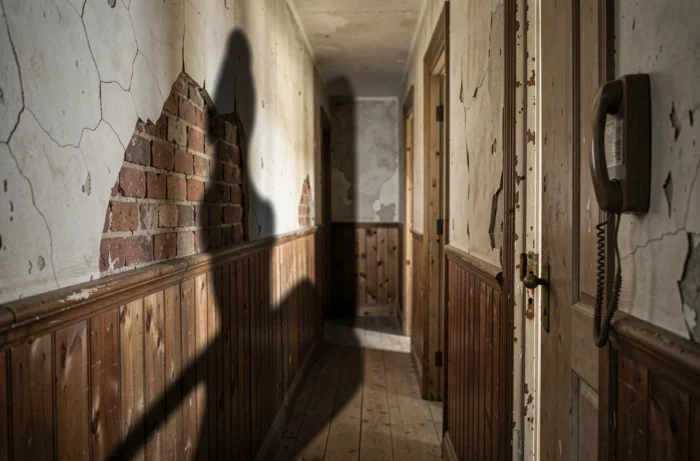
The classic list of signs (nocturnal noises, moved objects, cold drafts, agitated animals) circulates everywhere. The problem is that it mixes clues that have an identifiable cause with others that remain truly unexplained after verification.
Signals to check first with a building professional
- Doors that open or close by themselves: in most cases, a misalignment of the frame or a pressure difference between two rooms (poorly adjusted ventilation, improperly sealed window) is enough to explain it.
- Localized temperature variations: a thermal bridge, degraded insulation behind a wall, or an unsealed chimney flue create very distinct cold spots, sometimes in less than one square meter.
- Knocking or scratching noises in the walls: expanding copper pipes, rodents, or wood shrinkage in old frameworks.
- Repeated electrical malfunctions (flickering lights, devices turning on): outdated wiring, defective grounding, or micro-cuts in the local network are the most common causes.
Eliminating each technical cause before considering the paranormal is not a gratuitous skeptical reflex. It is a method that protects both your wallet and your peace of mind.
What remains after the checks
It happens that all technical checks return normal. The noises persist, animals still react in the same spot, and several occupants independently report the same feeling of oppression in a specific room. Feedback varies on this point, but it is at this stage that some occupants choose to call in specialized practitioners (mediums, geobiologists, soul passers).
Haunted dwelling and real estate law: what the law really provides
An angle that articles on paranormal phenomena almost always ignore: French law offers concrete remedies when manifestations have an identifiable origin. If the noises, vibrations, or nuisances come from a neighbor, a business, or a technical installation, the abnormal neighborhood disturbance is an operational legal framework.
A tenant can demand that their landlord take action. A homeowner can request a reduction in the sale price if they discover after purchase that a neighbor or an installation generates concealed nuisances, which also falls under the warranty of hidden defects.
In practice, phenomena are documented (dated journal, audio recordings, bailiff reports) and a technical diagnosis is performed. If the source is a defect in the building or an external nuisance, the judicial route is open.

Field protocol to document unexplained phenomena at home
Before calling anyone, you can structure your observations. A methodical record helps both a diagnostician and a practitioner specialized in the paranormal.
- Keep a dated journal: date, time, room, type of manifestation, conditions (weather, devices running, presence of other occupants).
- Use a digital thermometer to measure temperature differences between suspect areas and the rest of the home.
- Record sounds with a smartphone placed in the affected room overnight, noting the start and end times.
A well-kept journal distinguishes a feeling from a reproducible fact. If manifestations always occur at the same times, under the same conditions, you have an exploitable clue, whether the cause is technical or not.
Having an electrician, plumber, or acoustician come in first allows you to close off rational leads. Then, if you wish to explore other hypotheses, the collected data will serve as a working basis for a geobiologist or a medium, who can cross-reference their own observations with the concrete findings.
Whether leaning towards a physical explanation or remaining open to other interpretations, rigorous documentation remains the only solid starting point. A house that raises questions deserves answers, not assumptions.