Discover the exceptional wines of Maison Philippe Brédif
Chenin blanc is a grape variety that reveals itself over time. From one vintage to another, it changes in texture, aroma, and balance. The Philippe Brédif House, located in Rochecorbon in Touraine, has been exploiting this peculiarity for over a century. Its troglodyte cellars preserve bottles, some dating back to the early 20th century, making it one of the few estates where one can taste the evolution of Vouvray over several decades.
Chenin blanc and aging: what the cellars of Rochecorbon make possible
Have you ever noticed that the same white wine can seem vibrant and sharp at three years old, then become round, almost honeyed, after ten years in the cellar? Chenin blanc takes this phenomenon to the extreme. When young, it offers aromas of citrus, white flowers, and sometimes chalk. Over time, it develops notes of quince, candied fruits, and beeswax.
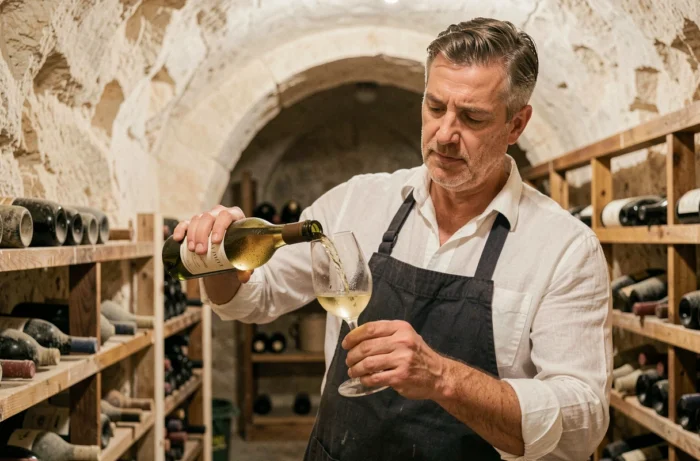
The Brédif House preserves vintages dating back to 1908 in its troglodytic galleries, carved into the tuffeau. The cellars extend over approximately 2 km of underground galleries dating from the 10th century. The temperature and humidity remain stable year-round, creating storage conditions that are difficult to replicate in a modern winery.
This is not just a decorative detail. The thermal consistency of the tuffeau allows the wine to age slowly, without shocks. The result is evident on the palate: a Vouvray from several decades retains freshness where other whites would have shifted towards oxidation. It is this ability to read the evolution of chenin over time that distinguishes a visit to Brédif from a classic tasting.
To better situate all the wines and activities offered by the estate, you can discover the Philippe Bredif website, which details each cuvée and each tour option.
Dry, sweet, and sparkling Vouvray: three styles under the same appellation
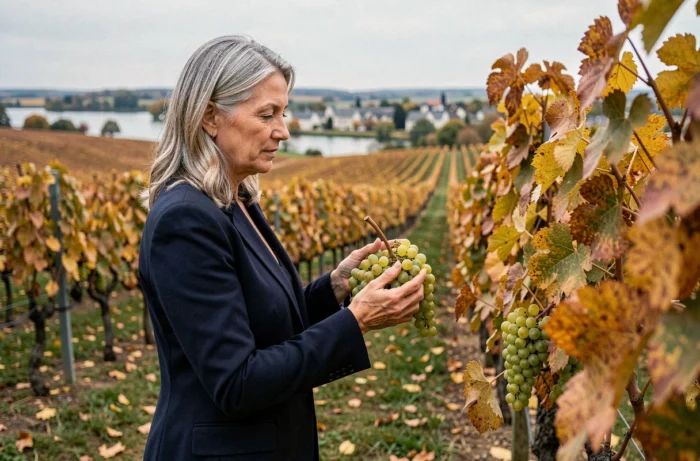
Vouvray is one of the few French appellations where a single grape variety produces wines that are so different from one another. Dry, semi-dry, sweet, or sparkling: it all depends on the vintage, the plot, and the timing of the harvest.
The role of the clay-limestone terroir
The soils of the appellation are not homogeneous. Depending on whether the plot rests on flint clay, pure limestone, or a sandier mix, the chenin expresses itself differently. The Brédif House vinifies with these variations in mind, resulting in several cuvées with distinct profiles:
- The classic Vouvray, often semi-dry, plays on the balance between residual sugar and the natural acidity of the grape variety. It pairs well with both a sauced fish and a Touraine goat cheese.
- In favorable vintages, the house produces late harvest cuvées that concentrate the aromas of ripe fruits and honey. Their production depends entirely on the climatic conditions of the year.
The sparkling Vouvray, made using the traditional method, remains less known than the still Vouvray, but it deserves attention for its fine bubbles and freshness.
A range beyond Vouvray
The house does not limit itself to chenin. It also offers cuvées based on cabernet franc, allowing it to cover several expressions of the Loire vineyard.
Vertical tasting and private tours: an experience segmented by audience
Why choose a vertical tasting over a classic tasting? The answer is one word: comparison. Tasting three or four vintages of the same wine allows one to concretely understand what time does to chenin. A warm year will yield a fuller Vouvray, while a cool year will produce a more vibrant wine. When placed side by side, the differences become evident, even for a novice palate.
The options offered by the Brédif House stand out for their level of segmentation. In 2026, several types of services coexist:
- The discovery tasting, accessible in about thirty minutes, offers a selection of five wines. It is suitable for a first approach.
- Private tours, whether individual or in small groups, include a tour of the troglodytic galleries followed by a commented tasting.
- Group services cater to specific needs: corporate seminars, private events, tasting introductions with an adapted educational format.
This organization by audience avoids the pitfall of a catch-all visit. A couple on a tourist getaway does not expect the same thing as a corporate committee of twenty people. The fact of privatizing the experience changes the quality of the interaction with the guide, who can tailor their discourse to the visitors’ level of knowledge.
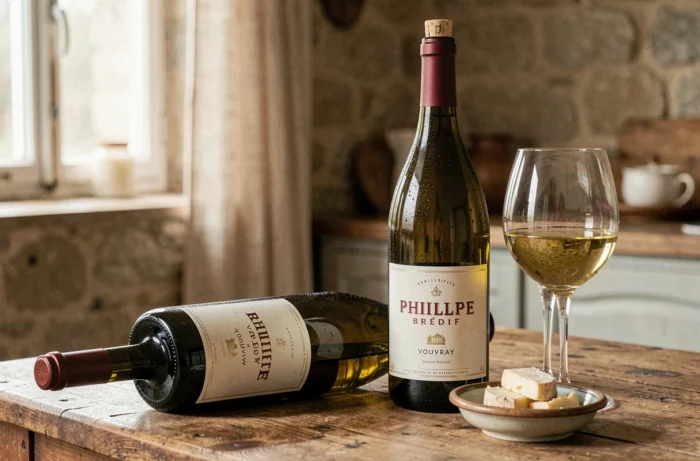
Vouvray terroir: what tuffeau brings to the wine
Tuffeau, this soft limestone characteristic of the Loire Valley, is not only used to dig cellars. It also forms the subsoil of many plots in the Vouvray appellation. Its porosity retains water deep down while draining the surface, forcing the vine to plunge its roots.
This controlled water stress promotes berry concentration. Chenin gains in aromatic complexity and density. The clays present on the surface retain nutrients and add roundness to the wine, while the more siliceous areas provide tighter, more mineral profiles.
The geological diversity of Vouvray explains the diversity of styles produced under the same appellation. The Brédif House, by selecting its plots according to these soil criteria, can offer a coherent yet varied range, from the sharpest dry to the most opulent sweet. The result is evident in the glass: wines that bear the signature of their terroir before that of the technique.