Discover the Land of Orthe during your stay in the Landes
The Pays d’Orthe occupies the extreme south of the Landes, where the combined Gaves create a natural border with the Basque Country. This territory includes about twenty municipalities between Peyrehorade, Hastingues, and Sorde-l’Abbaye, each featuring distinct built heritage, agricultural activities, or hillside landscapes. Understanding what differentiates these municipalities, their respective strengths, and the recent dynamics of the territory allows for the construction of a coherent stay rather than a simple collection of stops.
Listed Heritage and Recent Protections in the Pays d’Orthe
Several levels of protection overlap in the Pays d’Orthe, and a procedure initiated in 2024 is reshaping the management of local heritage.
The Community of municipalities has launched a study of remarkable heritage sites in Sorde-l’Abbaye. This regulatory framework goes beyond simple listing as historical monuments: it governs the evolution of buildings within a defined perimeter, with consequences for future tourist developments and the village’s appearance.
The abbey of Sorde is classified as a UNESCO World Heritage site under the routes of Santiago de Compostela. This dual anchoring, religious and pilgrimage-related, remains little detailed in general guides.
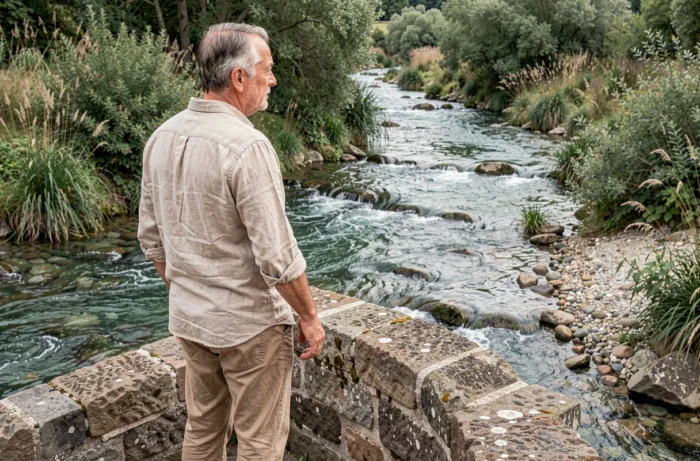
Visitors sensitive to heritage shaped by a watercourse and ancient human activity, including in very different contexts like the northern territories documented by Lapland Unpacked, will recognize a similar logic in the Pays d’Orthe.
| Municipality | Main Heritage Element | Type of Protection |
|---|---|---|
| Sorde-l’Abbaye | Abbey | UNESCO (Santiago de Compostela routes) + study of remarkable heritage site (2024) |
| Hastingues | Medieval bastide | Listed village |
| Peyrehorade | Historic castles | Local heritage |
These three heritage hubs are each located less than twenty minutes apart by car, making their combined visit easier.
Peyrehorade and the Gaves: Local Life and Natural Hazards
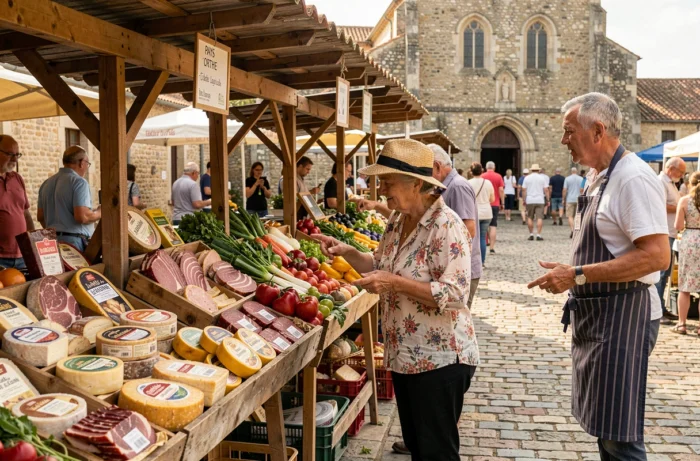
Peyrehorade serves as the gravitational center of the Pays d’Orthe. Its weekly market brings together producers of kiwis (the Adour basin is one of the main production areas in France), foie gras, pastis landais, and specialties like the Lou Palou pie.
The uniqueness of this market lies in the density of products offered within a restricted area, between Rue du Trinquet and Place Aristide-Briand. Its clientele extends well beyond the municipal boundaries.
The Structuring Role of the Combined Gaves
The Gaves d’Oloron and de Pau converge upstream of Peyrehorade. The resulting watercourse, the Combined Gaves, joins the Adour a few kilometers downstream. This confluence has sculpted the local geography: steep valleys, limestone hills, and flood-prone areas in the valley bottom.
This geography generates a practical constraint. The flood risk around Peyrehorade is documented, notably by Climascore data. Winter floods can cut off certain low roads and make parking areas inaccessible. Between November and March, checking prefectural alerts before traveling in the valley bottoms remains a reasonable precaution.
Mobility in the Territory
The Community of municipalities has scheduled for 2025 the creation of an inter-municipal carpooling parking lot and the provision of shared vehicles. The public transport network remains limited, but these measures open an alternative to individual cars.
- The inter-municipal carpooling targets municipalities far from main roads, particularly those located on the hills south of Peyrehorade.
- Shared vehicles allow for connections between Sorde-l’Abbaye, Hastingues, and Peyrehorade without relying on a personal vehicle.
- Marked walking discovery trails by the Community of municipalities exist in Habas, Hastingues, Sorde-l’Abbaye, Misson, and Labatut, offering a complementary mode of exploration.
Terroir of the Pays d’Orthe: What the Hills and Valleys Produce
The Pays d’Orthe does not belong to the classic wine-growing register of the Southwest. Its agriculture is based on an atypical combination for the region.
Kiwi fields mark the landscape alongside corn or meadows. Orchards stretch along the Gaves, benefiting from the mild climate and alluvial soils of the Adour basin.
Foie gras and fattened duck remain economic pillars. Direct sales at the farm have developed, with operations like the Lassalle farm in Gaas or producers in Orthevielle. The Orthe farm in Orthevielle illustrates this short circuit where production and dining coexist within a confined area.
Pastis landais and Sweet Specialties
Pastis landais is the emblematic sweet specialty of the territory. Each baker defends their own version of this brioche cake, and the differences in texture from one artisan to another are notable.
The “merveilles,” fried doughnuts dusted with sugar, complement the offerings at the stalls. These two specialties can be easily found at the Peyrehorade market and with artisans in neighboring municipalities.
Territorial Planning and Transformation of the Pays d’Orthe
The territory is undergoing a structuring phase that goes beyond the tourist aspect. In 2025, the Community of municipalities has engaged a geomatics service to feed into the inter-municipal Local Urban Plans (PLUi). The effects of this technical work will be visible in the coming years.
The ongoing inter-municipal mapping modifies the management of landscapes and buildable areas. Some villages will retain their current silhouette, while others will welcome new developments.
- Protected areas around Sorde-l’Abbaye are expected to see their protection perimeter strengthened by the remarkable heritage site study.
- Areas near the Combined Gaves may be subject to restrictions related to flood risk, limiting urbanization in the valley bottom.
- The limestone hills, less exposed to natural hazards, concentrate a portion of housing and tourist accommodation projects.
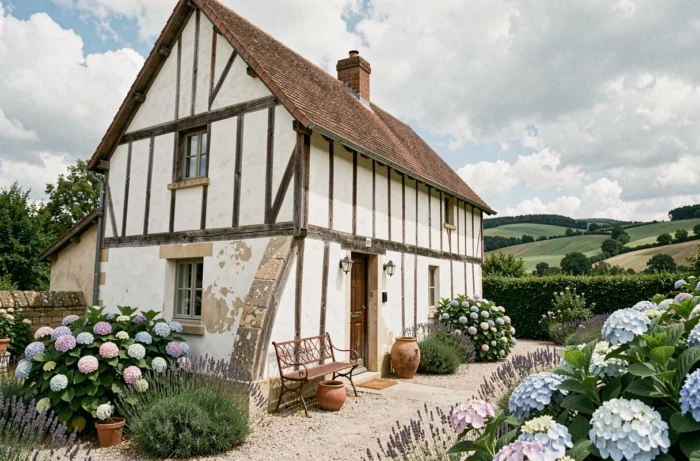
The Pays d’Orthe can be discovered by connecting built heritage, agricultural production, and river geography. A UNESCO-listed abbey, a dense producer market, and a network of Gaves that structures the entire landscape give the territory a coherence that most tourist stops in the Landes, focused on the coast, do not share.